
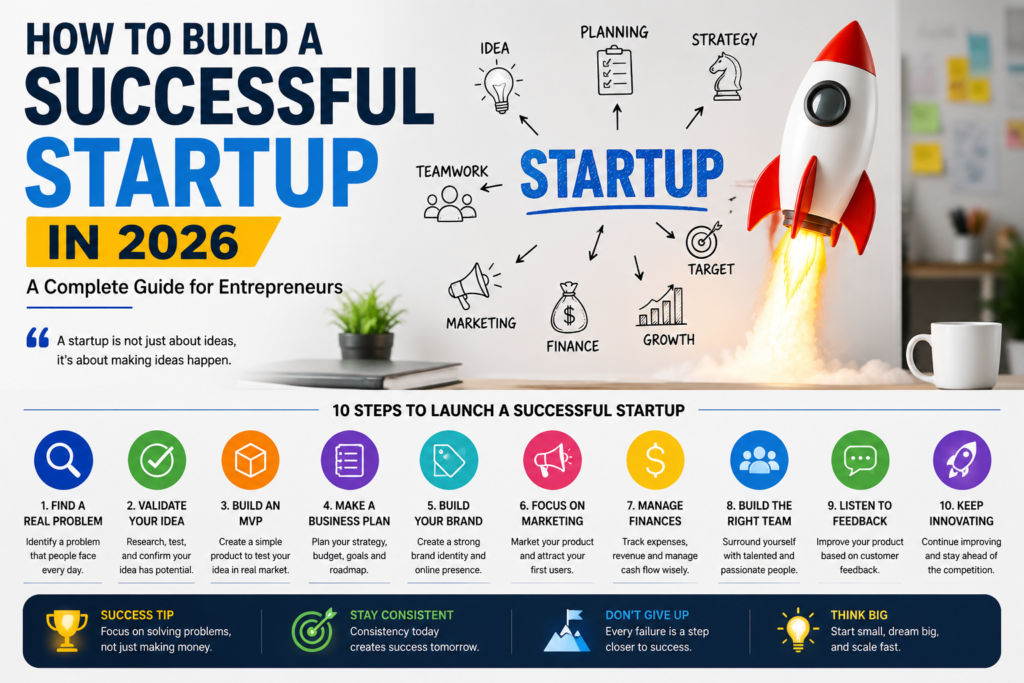
Top 10 Startup Mistakes
Top 10 Startup Mistakes Every Entrepreneur Should Avoid in 2026
Published on July 2026 • 10 min read
Introduction
Starting a business is exciting, but building a successful startup requires much more than a great idea. Every year, thousands of startups are launched around the world, yet many fail within the first few years because of avoidable mistakes.
Most startup failures are not caused by bad luck—they happen because founders ignore market research, run out of money, fail to understand their customers, or grow too quickly.
The good news is that these mistakes can be avoided. Learning from the experiences of successful entrepreneurs can save you time, money, and frustration.
In this article, we’ll discuss the 10 biggest startup mistakes every entrepreneur should avoid in 2026.
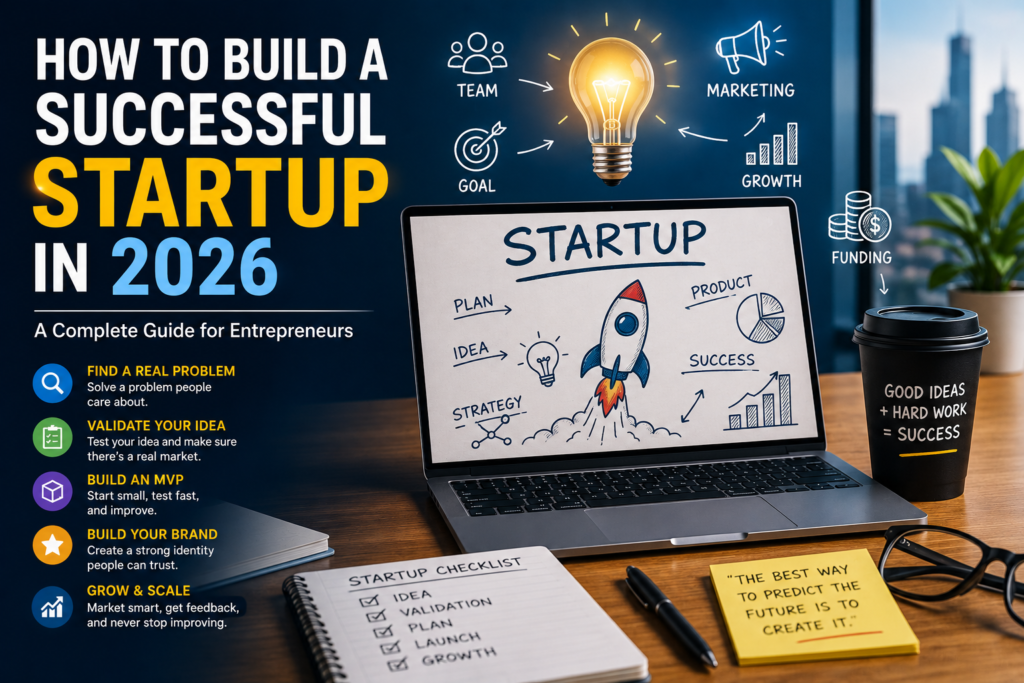
1. Starting Without Market Research
Many entrepreneurs build products they believe people need without first validating the idea.
Before launching your startup, research:
- Your target audience
- Competitors
- Customer problems
- Market demand
- Pricing strategies
Understanding your market reduces risk and increases your chances of success.
2. Ignoring Customer Feedback
Your customers know what they want better than anyone else.
Many startups fail because founders continue building features customers don’t actually need.
Always collect feedback through:
- Surveys
- Reviews
- Interviews
- Social Media
- Customer Support
Listening to customers helps improve your product continuously.
3. Running Out of Money
Cash flow is one of the biggest reasons startups fail.
Many founders spend too much on:
- Luxury offices
- Expensive equipment
- Large teams
- Unnecessary software
Instead, focus on managing your budget wisely and investing only in what helps your business grow.
4. Trying to Build a Perfect Product
Perfection often delays success.
Instead of spending years building every feature, launch a Minimum Viable Product (MVP).
An MVP allows you to:
- Test the market
- Receive customer feedback
- Improve your product quickly
- Save development costs
5. Poor Marketing Strategy
Even the best product cannot succeed if nobody knows it exists.
Successful startups invest in marketing through:
- SEO
- Social Media
- Email Marketing
- Content Marketing
- Paid Advertising
Marketing should begin before your official launch.
6. Choosing the Wrong Team
Your team plays a major role in your startup’s success.
Hire people who:
- Share your vision
- Have complementary skills
- Communicate effectively
- Solve problems creatively
A motivated and talented team can overcome many business challenges.
7. Ignoring Competition
Some founders avoid studying competitors because they fear copying ideas.
In reality, competitor research helps you understand:
- Market trends
- Customer expectations
- Pricing models
- Product improvements
Learning from competitors helps you build a stronger business.
8. Scaling Too Quickly
Rapid growth sounds exciting, but expanding before your business is ready can create serious problems.
Grow only after you have:
- Stable revenue
- Happy customers
- Reliable systems
- Strong customer support
Sustainable growth is better than rapid growth without planning.
9. Neglecting Branding
A startup without strong branding is difficult to remember.
Build a professional identity by creating:
- A memorable business name
- A modern logo
- A professional website
- Consistent brand colors
- A clear brand message
Strong branding builds customer trust and recognition.
10. Giving Up Too Early
Every successful entrepreneur experiences setbacks.
Challenges are part of the startup journey.
Instead of quitting after failure:
- Learn from mistakes
- Improve your strategy
- Adapt to market changes
- Keep moving forward
Persistence is one of the most valuable qualities of successful founders.
Tips for Startup Success
To improve your chances of success:
- Solve real problems.
- Validate your idea early.
- Build an MVP first.
- Listen to customers.
- Manage your finances carefully.
- Invest in marketing.
- Build a strong team.
- Continue learning.
Small improvements made consistently can produce remarkable long-term results.
Final Thoughts
Every startup faces obstacles, but many failures can be prevented with proper planning and smart decision-making. Successful entrepreneurs don’t avoid mistakes completely—they learn from them quickly and adapt.
Building a startup is a journey of continuous improvement, customer focus, and resilience.
Conclusion
Launching a startup in 2026 offers incredible opportunities, but success requires more than passion alone. By avoiding common mistakes such as poor planning, weak marketing, overspending, and ignoring customer feedback, you can build a stronger and more sustainable business.
Remember, every successful company started with small steps, continuous learning, and the determination to keep moving forward. Focus on creating value, solving real problems, and improving every day—your startup’s success will follow.

Stay Updated 🚀
Get the latest tutorials, WordPress tips, AI updates and web development articles delivered directly to your inbox.
Related Posts
💬 Discussion
0 Comments