
The Future of Technology 2026
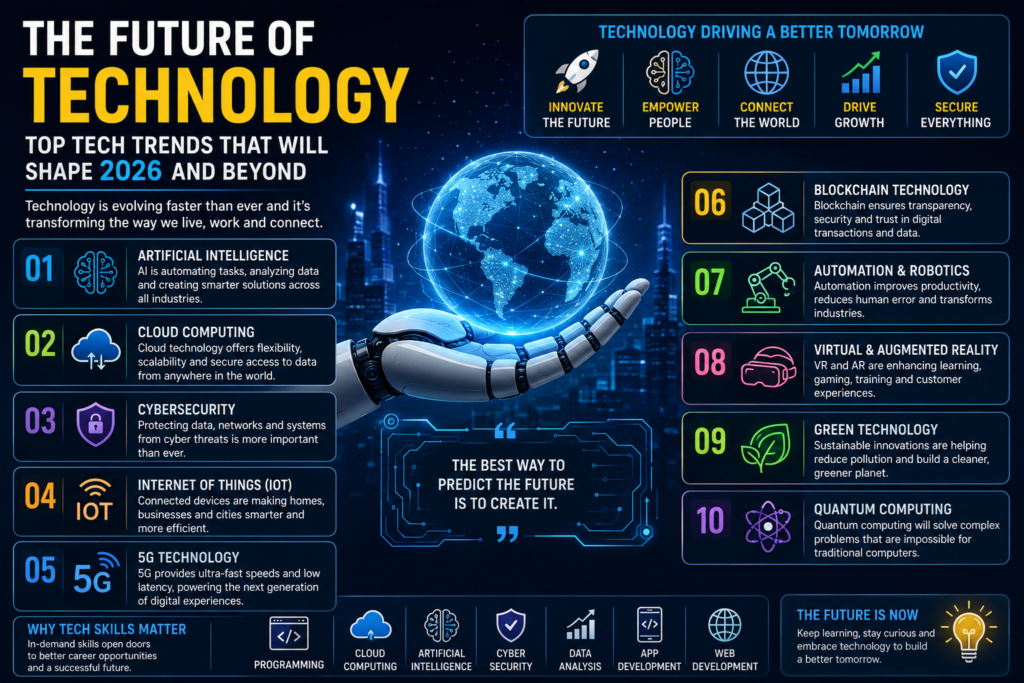
The Future of Technology: Top Tech Trends That Will Shape 2026 and Beyond
Published on July 2026 • 10 min read
Introduction
Technology is evolving faster than ever before. Every year brings new innovations that transform the way we work, communicate, learn, and do business. From Artificial Intelligence and cloud computing to smart devices and cybersecurity, technology has become an essential part of our daily lives.
Businesses are investing billions of dollars in digital transformation, while individuals are learning new technical skills to stay competitive in the modern job market. Understanding the latest technology trends is no longer optional—it’s essential for anyone who wants to succeed in the digital era.
In this article, we’ll explore the most important technology trends shaping 2026 and how they will influence the future.
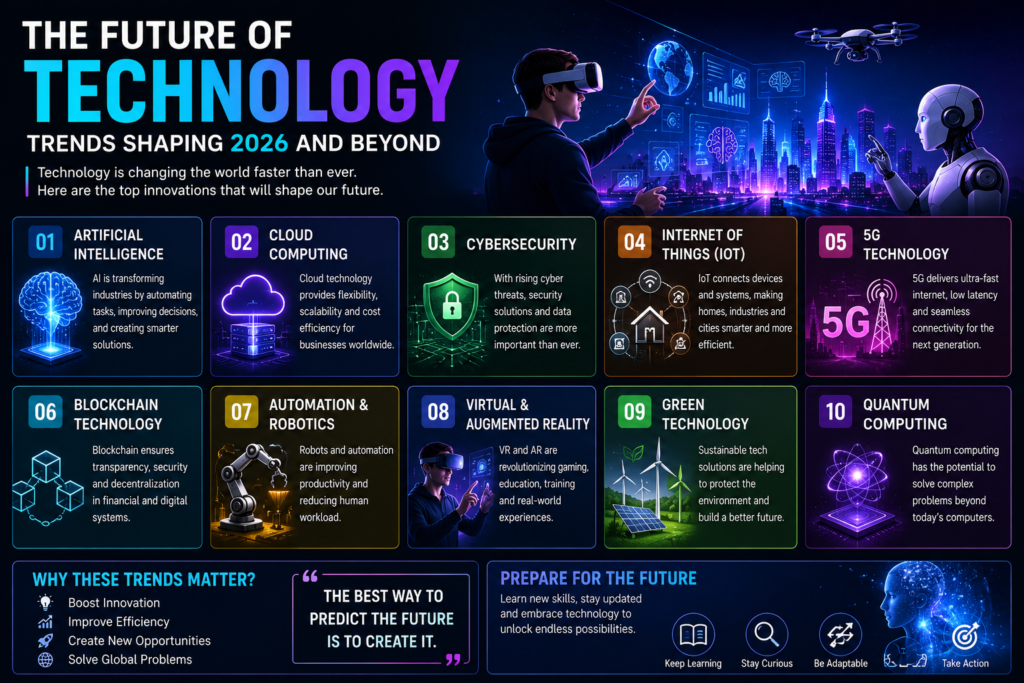
1. Artificial Intelligence (AI)
Artificial Intelligence continues to be one of the fastest-growing technologies in the world. AI is helping businesses automate tasks, improve customer service, analyze large amounts of data, and create smarter applications.
AI is being used in:
- Healthcare
- Education
- Banking
- Software Development
- Customer Support
- Marketing
As AI becomes more advanced, it will continue changing industries and creating new career opportunities.
2. Cloud Computing
Cloud computing allows businesses and individuals to access data and applications from anywhere in the world.
Instead of relying on local servers, organizations now use cloud platforms to improve flexibility, security, and scalability.
Benefits of Cloud Computing
- Lower Costs
- Better Security
- Remote Access
- Easy Collaboration
- Automatic Backups
- Scalability
Cloud computing remains one of the most valuable skills for IT professionals.
3. Cybersecurity
As technology grows, cyber threats become more sophisticated.
Organizations are investing heavily in cybersecurity to protect sensitive information from hackers, ransomware, and data breaches.
Cybersecurity focuses on:
- Network Security
- Data Protection
- Ethical Hacking
- Security Monitoring
- Risk Management
Cybersecurity professionals are among the most in-demand experts in today’s job market.
4. Internet of Things (IoT)
The Internet of Things connects everyday devices to the internet, allowing them to communicate and share data automatically.
Examples include:
- Smart Homes
- Smart Watches
- Smart Cars
- Industrial Sensors
- Smart Cities
IoT is making homes and businesses more efficient and connected.
5. 5G Technology
5G networks provide faster internet speeds, lower latency, and better connectivity compared to previous generations.
This technology enables:
- High-Speed Streaming
- Online Gaming
- Remote Healthcare
- Smart Manufacturing
- Autonomous Vehicles
As 5G expands worldwide, it will support the next generation of digital services.
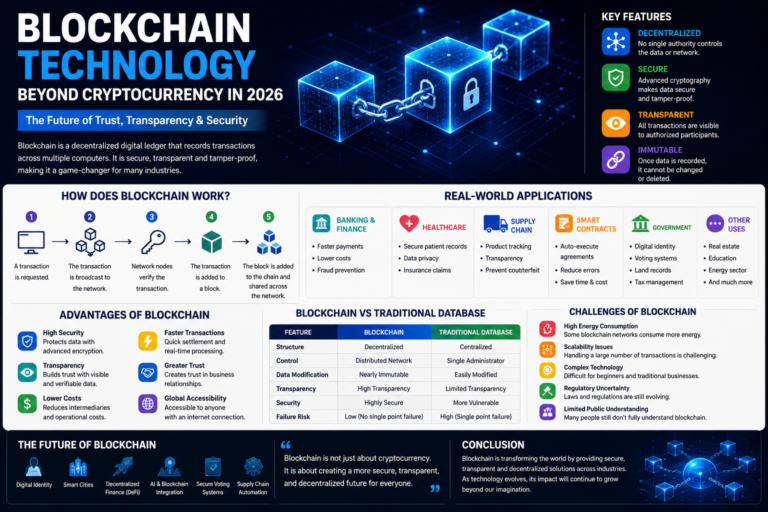
6. Blockchain Technology
Blockchain is no longer limited to cryptocurrencies.
Today it is used for:
- Secure Payments
- Digital Identity
- Supply Chain Management
- Healthcare Records
- Smart Contracts
Its transparency and security make it valuable across many industries.
7. Automation and Robotics
Businesses increasingly use automation and robotics to improve productivity and reduce repetitive work.
Applications include:
- Manufacturing
- Warehousing
- Healthcare
- Logistics
- Agriculture
Automation helps organizations improve efficiency while reducing operational costs.
8. Virtual Reality (VR) and Augmented Reality (AR)
VR and AR technologies are transforming education, gaming, healthcare, and training.
Common applications include:
- Virtual Classrooms
- Medical Training
- Product Visualization
- Real Estate Tours
- Gaming Experiences
These technologies provide immersive experiences that improve learning and engagement.
9. Green Technology
Sustainability has become a global priority.
Green technology focuses on reducing environmental impact through innovations such as:
- Renewable Energy
- Electric Vehicles
- Smart Energy Systems
- Sustainable Manufacturing
- Eco-Friendly Products
Technology is playing an important role in building a cleaner future.
10. Quantum Computing
Although still developing, quantum computing has the potential to solve problems far beyond the capabilities of traditional computers.
Future applications may include:
- Drug Discovery
- Financial Modeling
- Climate Research
- Artificial Intelligence
- Scientific Simulations
Quantum computing represents one of the most exciting areas of future technology.
Why Technology Skills Matter
Learning technology skills opens doors to better career opportunities and higher earning potential.
Popular skills include:
- Programming
- Cloud Computing
- Artificial Intelligence
- Cybersecurity
- Data Analysis
- Web Development
- Mobile App Development
Continuous learning helps professionals stay competitive in a rapidly changing industry.
Final Thoughts
Technology continues to reshape every aspect of our lives. Businesses that embrace innovation become more competitive, while individuals who develop technical skills gain access to exciting career opportunities.
Whether you’re a student, developer, entrepreneur, or business owner, staying informed about emerging technologies will help you adapt to future challenges and opportunities.
Conclusion
The future belongs to those who are willing to learn, adapt, and innovate. From Artificial Intelligence to Quantum Computing, today’s emerging technologies will define tomorrow’s world.
Start learning today, keep exploring new ideas, and invest in your digital skills. Technology isn’t just changing the future—it’s creating it.

Stay Updated 🚀
Get the latest tutorials, WordPress tips, AI updates and web development articles delivered directly to your inbox.
Related Posts
💬 Discussion
0 Comments