
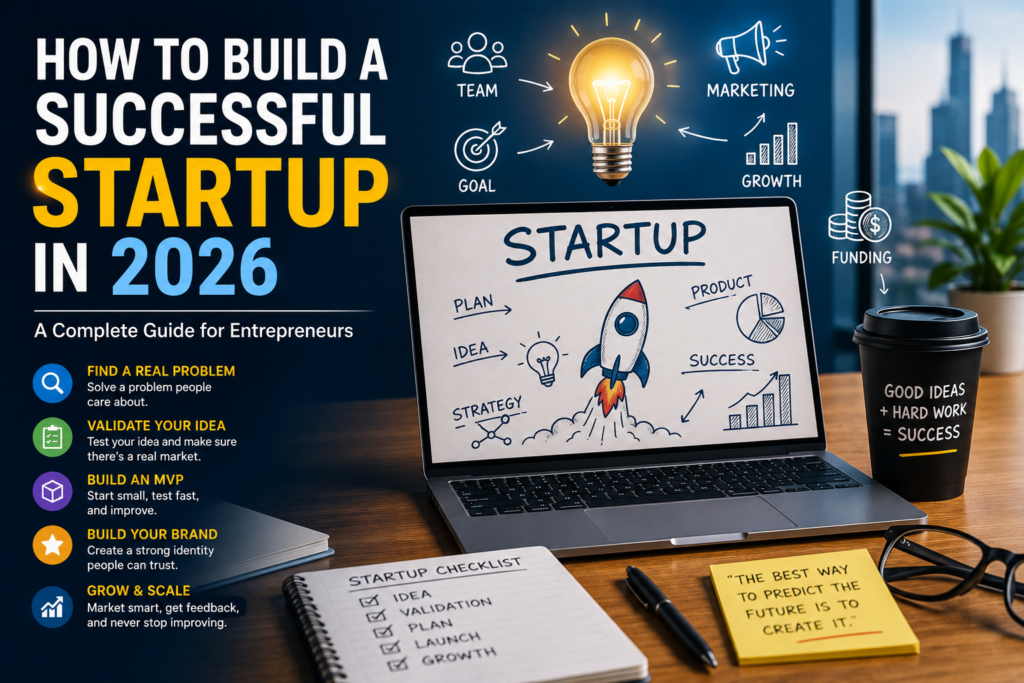
Complete Guide for Entrepreneurs
How to Build a Successful Startup in 2026: A Complete Guide for Entrepreneurs
Published on July 2026 • 11 min read
Introduction
Building a startup is one of the most exciting journeys an entrepreneur can take. Every successful company, from small local businesses to global technology giants, started with a simple idea and a vision to solve a real problem.
In 2026, launching a startup has become more accessible than ever. Thanks to the internet, cloud computing, Artificial Intelligence, and digital marketing, entrepreneurs can start businesses with lower costs and reach customers worldwide.
However, creating a successful startup requires more than just a good idea. It demands planning, execution, innovation, and persistence.
This guide explains the essential steps to build a successful startup in today’s competitive business environment.
What is a Startup?
A startup is a newly established business designed to solve a specific problem through innovative products or services.
Unlike traditional businesses, startups focus on rapid growth, technology, scalability, and innovation.
Many famous companies began as startups before becoming global brands.
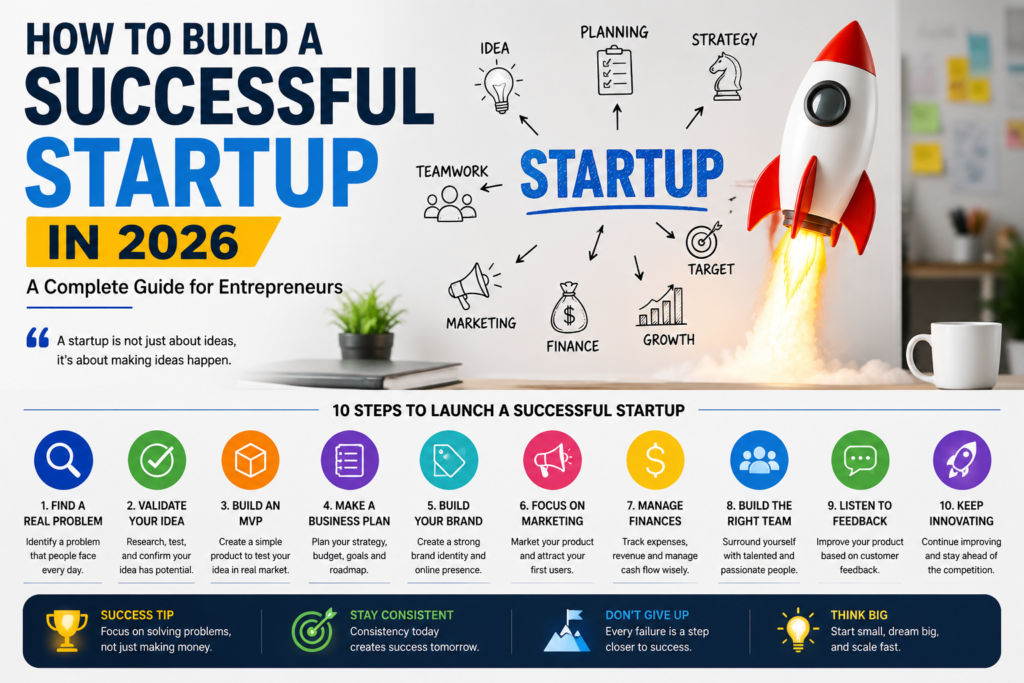
1. Find a Real Problem
Every successful startup begins by solving a real problem.
Instead of asking:
“What business should I start?”
Ask yourself:
- What problems do people face every day?
- What can be improved?
- What services are missing?
- How can technology make life easier?
The bigger the problem you solve, the bigger your opportunity.
2. Validate Your Idea
Before investing time and money, test whether people actually need your product.
Ways to validate your idea include:
- Customer Surveys
- Online Polls
- Landing Pages
- Social Media Feedback
- Competitor Analysis
Early validation reduces business risk and saves valuable resources.
3. Build a Minimum Viable Product (MVP)
Instead of building a perfect product immediately, create a simple version that solves the core problem.
An MVP allows you to:
- Test the market
- Collect customer feedback
- Improve your product
- Launch faster
Many successful startups started with a basic version before adding advanced features.
4. Create a Strong Business Plan
A startup needs a clear roadmap.
Your business plan should include:
- Business Vision
- Target Audience
- Revenue Model
- Marketing Strategy
- Budget
- Growth Plan
- Competitive Analysis
A well-structured plan helps attract investors and keeps your team focused.
5. Build Your Brand
Branding is more than just a logo.
Your startup should have:
- A memorable name
- Professional logo
- Brand colors
- Website
- Social media presence
- Clear brand message
A strong brand builds trust and helps customers recognize your business.
6. Focus on Digital Marketing
Even the best product won’t succeed if nobody knows about it.
Effective marketing strategies include:
- Search Engine Optimization (SEO)
- Content Marketing
- Social Media Marketing
- Email Marketing
- Influencer Marketing
- Paid Advertising
Consistent marketing helps startups attract customers and grow faster.
7. Manage Your Finances
Financial discipline is essential for every startup.
Track:
- Startup Costs
- Monthly Expenses
- Revenue
- Profit
- Cash Flow
Avoid unnecessary spending during the early stages and invest wisely in growth.
8. Build the Right Team
No successful startup is built by one person alone.
Hire people who:
- Share your vision
- Have complementary skills
- Communicate well
- Adapt quickly
- Solve problems creatively
A motivated team is one of the greatest strengths of any startup.
9. Learn from Customer Feedback
Customer feedback is one of the most valuable resources for improving your business.
Listen carefully to:
- Reviews
- Complaints
- Suggestions
- Feature Requests
Successful startups continuously improve based on real customer needs.
10. Never Stop Innovating
Markets change quickly.
Successful startups continue improving their:
- Products
- Services
- Marketing
- Customer Experience
- Technology
Innovation helps businesses stay competitive and adapt to changing customer expectations.
Common Mistakes Startup Founders Make
Many startups fail because of avoidable mistakes.
Some of the most common include:
- Building products nobody needs
- Ignoring customer feedback
- Running out of cash
- Poor marketing
- Weak business planning
- Trying to grow too quickly
Learning from these mistakes greatly increases your chances of success.
Startup Trends in 2026
Some of the fastest-growing startup sectors include:
- Artificial Intelligence
- FinTech
- HealthTech
- EdTech
- SaaS
- Cybersecurity
- Green Technology
- E-commerce
- Cloud Computing
- Automation
Entrepreneurs entering these industries have strong growth opportunities in the coming years.
Final Thoughts
Building a startup is not about becoming successful overnight. It requires patience, continuous learning, smart decision-making, and the ability to adapt when challenges arise.
The most successful entrepreneurs focus on solving real problems, delivering value to customers, and constantly improving their products.
Conclusion
Starting a successful startup in 2026 is more achievable than ever before. Technology has removed many traditional barriers, allowing entrepreneurs to launch innovative businesses with limited resources.
If you have a great idea, validate it, build a simple solution, learn from your customers, and remain consistent. Every successful startup once started with a single idea—and yours could be the next success story.

Stay Updated 🚀
Get the latest tutorials, WordPress tips, AI updates and web development articles delivered directly to your inbox.
Related Posts
💬 Discussion
0 Comments